In today’s digital world, almost every electronic device relies on a Printed Circuit Board (PCB). From smartphones and laptops to medical equipment, industrial automation systems, electric vehicles, aerospace electronics, and IoT devices, the Printed Circuit Board (PCB) serves as the foundation that enables electronic components to communicate and function efficiently.
As electronic products become smaller, faster, and more powerful, the importance of Printed Circuit Board (PCB) technology continues to grow. Modern Printed Circuit Board (PCB) solutions now support high-speed data transmission, advanced power management, thermal control, miniaturization, and intelligent connectivity.
This comprehensive guide explains what a Printed Circuit Board (PCB) is, how it works, different PCB types, PCB manufacturing processes, industry applications, and how to choose the right PCB Manufacturer for your next project.
What Is a Printed Circuit Board (PCB)?
A Printed Circuit Board (PCB) is a mechanical and electrical platform that connects electronic components through conductive copper traces etched onto an insulating substrate.
The primary functions of a Printed Circuit Board (PCB) include:
- Providing electrical connections between components
- Supporting mechanical mounting of components
- Managing signal transmission
- Distributing power efficiently
- Dissipating heat
- Protecting electronic assemblies
Without a Printed Circuit Board (PCB), modern electronic products would require complex manual wiring, resulting in larger sizes, lower reliability, and higher manufacturing costs.
Basic Structure of a PCB
A typical Printed Circuit Board (PCB) consists of:
| Layer | Function |
|---|---|
| Copper Layer | Conducts electrical signals |
| Substrate | Provides insulation and support |
| Solder Mask | Protects copper traces |
| Silkscreen | Displays component markings |
| Surface Finish | Prevents oxidation and improves solderability |
The combination of these layers creates a highly reliable electronic platform capable of supporting complex circuits.
The Evolution of Printed Circuit Board (PCB) Technology
Early electronic devices used point-to-point wiring, which was labor-intensive and prone to failure.
The introduction of the Printed Circuit Board (PCB) revolutionized electronics by:
- Reducing wiring complexity
- Improving reliability
- Enabling mass production
- Supporting miniaturization
- Increasing product performance
Today, advanced Printed Circuit Board (PCB) technologies such as HDI PCB, High Speed PCB, and High Frequency PCB support AI servers, 5G infrastructure, autonomous vehicles, and wearable electronics.
Main Types of Printed Circuit Board (PCB)
Different applications require different types of Printed Circuit Board (PCB) structures.
Rigid PCB
A Rigid PCB uses a solid substrate material such as FR4.
Advantages:
- Cost-effective
- High mechanical strength
- Suitable for mass production
Applications:
- Computers
- Consumer electronics
- Industrial equipment
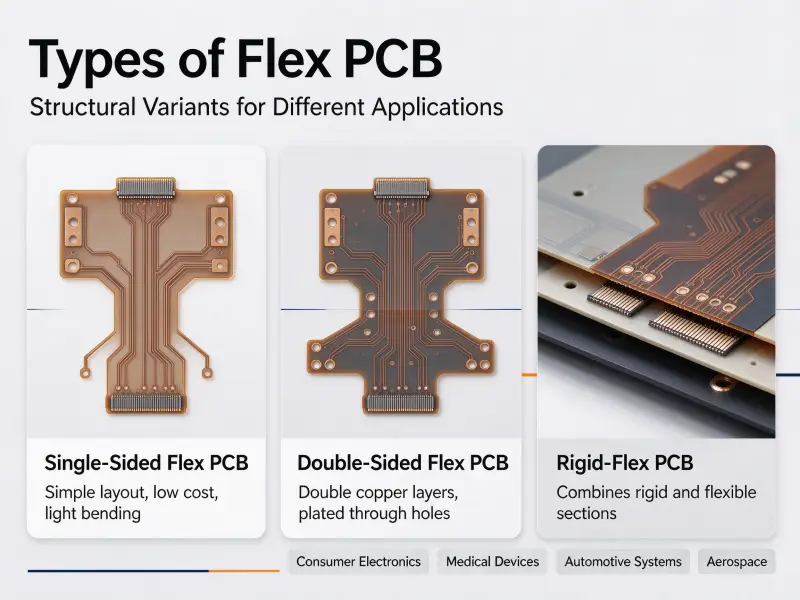
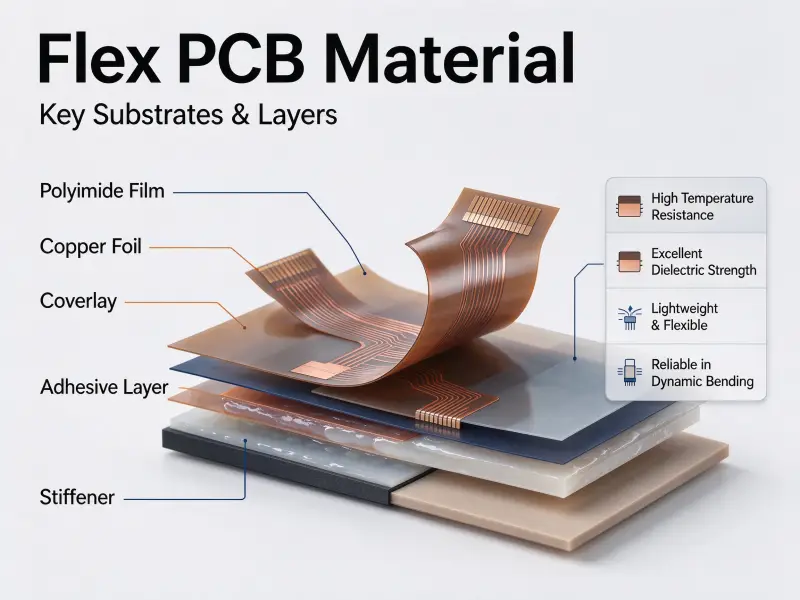
Flex PCB
A Flex PCB uses flexible polyimide material.
Advantages:
- Lightweight
- Bendable
- Space-saving
Applications:
- Smartphones
- Cameras
- Wearable devices
Rigid-Flex PCB
A Rigid-Flex PCB combines rigid and flexible sections.
Advantages:
- Improved reliability
- Reduced connectors
- Compact design
Applications:
- Aerospace systems
- Medical devices
- Military electronics
Multilayer PCB
A Multilayer PCB contains multiple conductive layers separated by dielectric materials.
Benefits include:
- Higher circuit density
- Better EMI control
- Improved signal integrity
Applications:
- Servers
- Telecom systems
- Networking equipment
HDI PCB
An HDI PCB (High Density Interconnect PCB) uses:
- Microvias
- Fine traces
- Sequential lamination
Benefits:
- Smaller board size
- Higher functionality
- Increased routing density
Applications:
- Smartphones
- Tablets
- Wearables
Specialized PCB Types
Aluminum PCB
An Aluminum PCB offers excellent heat dissipation through its metal base.
Applications:
- Power electronics
- LED modules
- Automotive lighting
Metal Core PCB
A Metal Core PCB improves thermal performance and durability.
Common uses:
- Industrial power systems
- LED drivers
- High-power converters
Ceramic PCB
A Ceramic PCB provides exceptional thermal conductivity and electrical insulation.
Applications:
- Aerospace electronics
- Medical equipment
- RF systems
Rogers PCB
A Rogers PCB uses advanced high-frequency laminate materials.
Benefits:
- Low dielectric loss
- Stable signal transmission
Applications:
- Radar systems
- Satellite communications
- 5G base stations
Heavy Copper PCB
A Heavy Copper PCB contains thick copper layers for high-current applications.
Applications:
- Power supplies
- Industrial controllers
- Electric vehicles
High Frequency PCB
A High Frequency PCB is optimized for RF and microwave performance.
Applications:
- Wireless communication
- Radar
- Satellite systems
High Speed PCB
A High Speed PCB supports ultra-fast digital signal transmission.
Applications:
- Data centers
- AI servers
- Telecom infrastructure
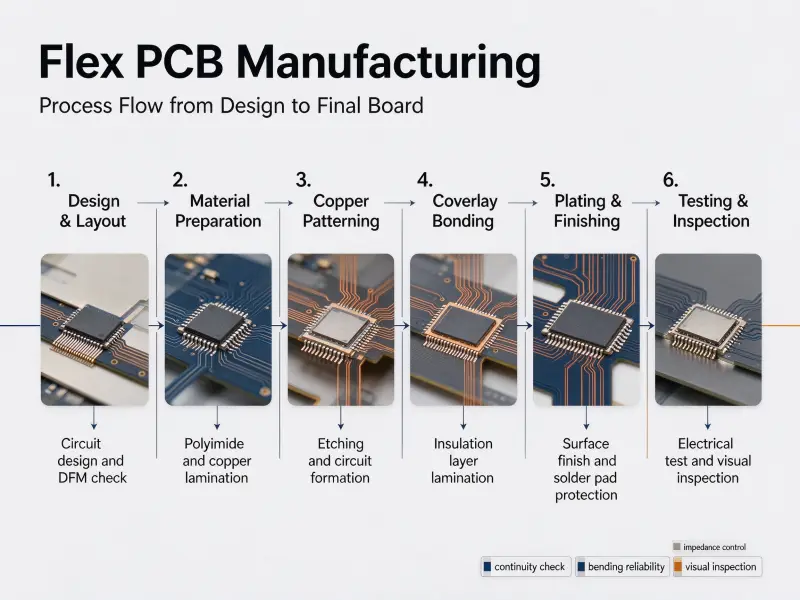
PCB Manufacturing Process
The quality of a Printed Circuit Board (PCB) heavily depends on the PCB Manufacturing process.
Step 1: PCB Design
Engineers create:
- Schematics
- PCB layouts
- Stack-up structures
Step 2: PCB Fabrication
PCB Fabrication converts digital designs into physical boards.
Processes include:
- Material preparation
- Imaging
- Etching
- Drilling
- Plating
- Lamination
- Surface finishing
Step 3: PCB Assembly Services
After fabrication, components are mounted through professional PCB Assembly Services.
Common assembly technologies include:
- Through-hole assembly
- SMT Assembly
- Mixed-technology assembly
Step 4: PCB Testing
Comprehensive PCB Testing ensures product quality.
Testing methods include:
| Test Type | Purpose |
|---|---|
| AOI | Detect visual defects |
| Flying Probe | Verify electrical connectivity |
| ICT | In-Circuit Testing |
| Functional Test | Validate product operation |
| X-Ray Inspection | Inspect hidden solder joints |
PCB Prototype Development
Before mass production, companies usually build a PCB Prototype.
Benefits include:
- Design verification
- Risk reduction
- Faster product development
Many companies choose a Prototype PCB service to:
- Evaluate performance
- Test manufacturability
- Verify functionality
Modern Quick Turn PCB services can produce prototypes within days.
PCB Assembly and Turnkey Solutions
Turnkey PCB Assembly
Turnkey PCB Assembly provides a complete manufacturing solution including:
- Component sourcing
- PCB fabrication
- SMT assembly
- Testing
- Final inspection
Advantages:
- Simplified supply chain
- Faster lead times
- Lower project management costs
Prototype PCBA
A Prototype PCBA allows engineers to validate complete electronic assemblies before full production.
Benefits:
- Faster product launch
- Reduced redesign costs
- Improved reliability
Box Build Assembly
Box Build Assembly extends beyond PCB assembly by integrating:
- Enclosures
- Wiring harnesses
- Displays
- Mechanical components
This provides customers with a fully assembled finished product.
PCB Applications Across Industries
Automotive PCB
The modern vehicle contains dozens of Automotive PCB systems.
Applications include:
- Battery management systems
- ADAS
- Infotainment
- EV power electronics
Medical PCB
A Medical PCB must meet strict reliability requirements.
Applications:
- Patient monitoring
- Imaging equipment
- Wearable healthcare devices
Industrial Control PCB
An Industrial Control PCB powers automation systems.
Applications:
- PLCs
- Motor drives
- Robotics
- Factory automation
Telecom PCB
A Telecom PCB supports modern communication infrastructure.
Applications:
- Routers
- Switches
- 5G equipment
- Optical networking
Aerospace PCB
An Aerospace PCB operates in harsh environments.
Requirements:
- High reliability
- Temperature resistance
- Vibration resistance
Applications:
- Satellites
- Avionics
- Defense systems
IoT PCB
An IoT PCB enables connected devices.
Applications:
- Smart homes
- Industrial IoT
- Wearables
- Asset tracking
Consumer Electronics PCB
A Consumer Electronics PCB powers everyday products.
Applications:
- Smartphones
- Tablets
- Smartwatches
- Home appliances
LED Lighting PCB
A LED Lighting PCB must provide efficient heat management.
Commonly uses:
- LED PCB
- Aluminum PCB
- Metal Core PCB
PCB Material Selection
Material selection significantly impacts Printed Circuit Board (PCB) performance.
| Material | Typical Application |
|---|---|
| FR4 | General electronics |
| Rogers | RF and microwave |
| Polyimide | Flex PCB |
| Aluminum | LED applications |
| Ceramic | High-temperature systems |
Proper material selection ensures:
- Signal integrity
- Thermal management
- Long-term reliability
Future Trends in Printed Circuit Board (PCB) Technology
Several trends are shaping the future of Printed Circuit Board (PCB) development.
AI and Data Centers
AI computing demands:
- High Speed PCB
- HDI PCB
- Advanced thermal management
5G and 6G Networks
Communication systems increasingly require:
- High Frequency PCB
- Rogers PCB
- Advanced signal integrity designs
Electric Vehicles
The EV market drives demand for:
- Heavy Copper PCB
- Automotive PCB
- High-power thermal solutions
Miniaturization
Consumer devices continue shrinking, leading to increased adoption of:
- HDI PCB
- Rigid-Flex PCB
- Advanced packaging technologies
Smart Manufacturing
Industry 4.0 accelerates demand for:
- Industrial Control PCB
- IoT-enabled systems
- Intelligent automation platforms
Why Choose SLPCBA as Your PCB Manufacturer?
When selecting a reliable PCB Manufacturer, experience, quality, and service capabilities are critical.
SLPCBA provides comprehensive electronic manufacturing solutions including:
Complete One-Stop Service
- PCB Fabrication
- PCB Assembly Services
- SMT Assembly
- Prototype PCBA
- Turnkey PCB Assembly
- Box Build Assembly
- Component sourcing
Advanced Manufacturing Capabilities
SLPCBA supports:
- Multilayer PCB
- HDI PCB
- Rigid PCB
- Flex PCB
- Rigid-Flex PCB
- Aluminum PCB
- Metal Core PCB
- Ceramic PCB
- Heavy Copper PCB
- Rogers PCB
- High Frequency PCB
- High Speed PCB
Strict Quality Assurance
Every project undergoes professional PCB Testing procedures, including:
- AOI inspection
- X-ray inspection
- Flying probe testing
- Functional testing
Fast Delivery
SLPCBA offers:
- Quick Turn PCB
- Fast PCB Prototype services
- Rapid production scheduling
Industry Experience
SLPCBA serves customers in:
- Automotive PCB
- Medical PCB
- Industrial Control PCB
- Telecom PCB
- LED Lighting PCB
- Aerospace PCB
- IoT PCB
- Consumer Electronics PCB
Conclusion
The Printed Circuit Board (PCB) is the foundation of modern electronics. Whether used in consumer products, industrial automation, medical systems, telecommunications, aerospace platforms, or electric vehicles, the Printed Circuit Board (PCB) enables the functionality, reliability, and performance that today’s technology demands.
As technologies such as AI, 5G, autonomous systems, and IoT continue to evolve, demand for advanced solutions including HDI PCB, High Speed PCB, High Frequency PCB, Rigid-Flex PCB, Multilayer PCB, and Turnkey PCB Assembly will continue to grow.
If you are looking for a trusted PCB Manufacturer capable of delivering high-quality PCB Fabrication, professional PCB Assembly Services, fast PCB Prototype production, and complete Turnkey PCB Assembly solutions, SLPCBA is your reliable partner. Contact SLPCBA today to discuss your project and receive expert engineering support for your next-generation electronic products.