Why the Printed Circuit Board (PCB) Changed Everything
The modern Printed Circuit Board (PCB) is the invisible backbone of every electronic system—from smartphones and servers to automotive controllers and aerospace navigation systems. Yet the journey from tangled wires to high-density multilayer interconnects is a century-long engineering evolution shaped by invention, war-time necessity, semiconductor miniaturization, and advanced manufacturing.
Today’s Printed Circuit Board (PCB) is no longer just a passive substrate. It is a precision-engineered platform integrating Electronic Components, thermal systems, signal routing, and mechanical support for extreme-performance applications such as AI computing, robotics, and high-frequency communication systems.
This article provides a deep historical and technical breakdown of history of pcbs, answering key questions such as:
- when were pcbs invented
- who invented the circuit board
- why are circuit boards green
- how do circuit boards work
It also connects historical evolution to modern industrial applications like HDI PCBs, High Speed PCB, and Rigid-Flexible-PCB systems, while introducing how SLPCBA supports next-generation PCB manufacturing and assembly.

Early Origins: Before the First Printed Circuit Board
Before the first printed circuit board, electronics relied on point-to-point wiring. Engineers manually connected components using insulated wires, solder joints, and mechanical supports.
Key limitations of early wiring systems:
- High failure rates due to vibration
- Difficult mass production
- Bulky and heavy structures
- Poor signal integrity
This complexity led to the need for a structured interconnect system, eventually resulting in the invention of the Printed Circuit Board (PCB).
Timeline of Invention: Who Invented the Circuit Board?
1903: Albert Hanson and the earliest PCB concept
German inventor Albert Hanson introduced one of the earliest concepts of flat foil conductors laminated onto insulating material. This is widely considered the conceptual foundation of the first printed circuit board.
1925: Charles Ducas and printed wiring paths
American inventor Charles Ducas patented a method of printing electrical paths using conductive ink on insulating surfaces. This innovation marked an early stage of history of pcbs, although it was not yet widely commercialized.
1943: Paul Eisler and the modern PCB breakthrough
Austrian engineer Paul Eisler is widely credited with creating the modern Printed Circuit Board (PCB). He developed copper-foil etching techniques that bonded conductive copper to insulating substrates.
His work was crucial in wartime electronics, especially:
- WWII proximity fuses
- early radar systems
This invention defines the modern foundation of PCB manufacturing and answers the core query: who invented the circuit board.
Why Are Circuit Boards Green?
One of the most common questions in electronics is why are circuit boards green.
The green color comes from:
- Solder mask coating applied to the board surface
- Protection against oxidation and short circuits
- Improved contrast for inspection
Modern Printed Circuit Board (PCB) manufacturing uses different solder mask colors, but green remains standard due to cost efficiency and industry tradition.
How Do Circuit Boards Work?
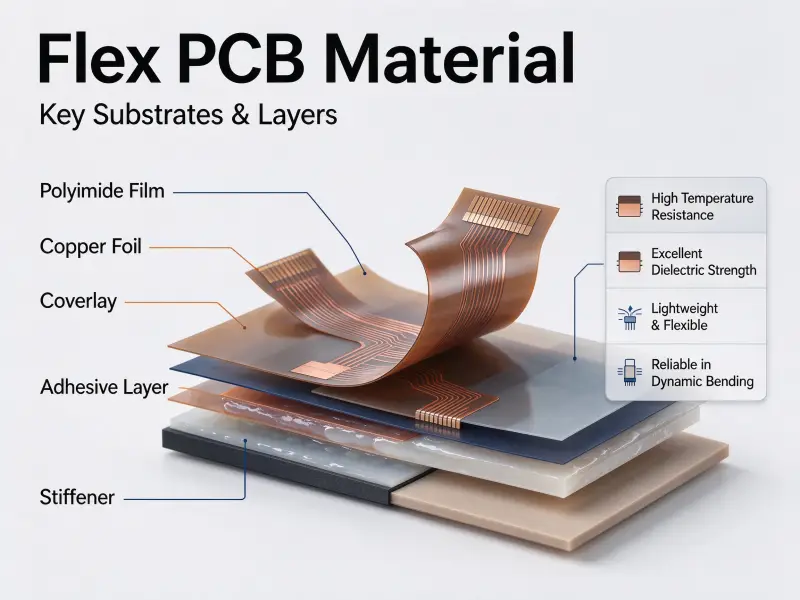
To understand how do circuit boards work, we must analyze their structural layers:
A Printed Circuit Board (PCB) functions by:
- Providing conductive copper pathways
- Mounting and connecting Electronic Components
- Ensuring electrical isolation between traces
Core functional elements:
- Copper traces (signal routing)
- Substrate (FR4, ceramic, aluminum)
- Solder mask protection layer
- Silkscreen labels (printed circuit board labels)
Modern systems integrate:
- printed circuit board capacitor
- printed circuit board switches
- printed circuit board fuses
WWII and the Industrialization of PCB Manufacturing
During World War II, PCB technology accelerated due to military demand.
Key innovations:
- Mass production techniques
- Etching-based copper patterning (printed circuit board etching)
- Early automation of soldering processes
By the 1950s:
- Transistor invention reduced component size
- Automated dip soldering enabled scalable production
This period marked the transition from experimental boards to industrial Printed Circuit Board (PCB) production.
1970s–1980s: IC Revolution and SMT Transformation
The introduction of Integrated Circuits (ICs) and Surface Mount Technology (SMT) revolutionized PCB design.
Major advancements:
- Components mounted directly on board surface
- Elimination of through-hole wiring complexity
- Increased circuit density
This era led to modern architectures:
- Rigid PCB
- single sided printed circuit board
- early multilayer designs
PCB density increased exponentially, enabling computers and consumer electronics.
1990s–Present: The Era of HDI and High-Speed Electronics
Modern electronics require extreme miniaturization and performance optimization.
Key PCB technologies today:
HDI PCBs
- High-density interconnect routing
- Microvias and buried vias
- Used in smartphones and AI systems
High Speed PCB
- Optimized signal integrity
- Reduced electromagnetic interference
High Frequency PCB
- RF communication systems
- 5G and radar applications
Advanced materials:
- Metal Core PCB
- Ceramic PCB
- aluminum printed circuit boards

PCB Material and Structural Engineering
Modern PCB manufacturing relies on precise standards:
Standard parameters:
- standard printed circuit board thickness
- printed circuit board thickness standards (0.4mm–3.2mm range depending on application)
- copper weight optimization
Structural components:
- printed circuit board standoffs
- pcb board holder
- pcb circuit board holder
These ensure mechanical stability during assembly and operation.
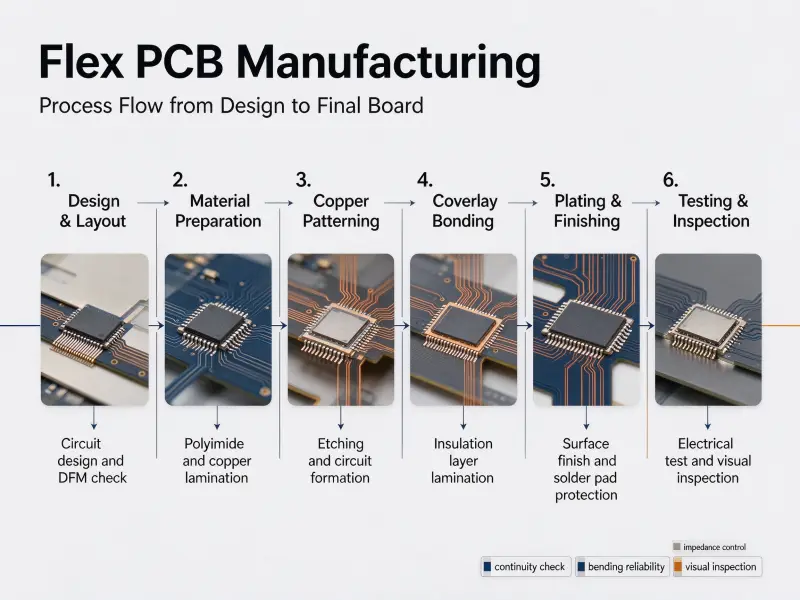
PCB Assembly and Manufacturing Workflow
PCB production stages:
- Design and simulation
- printed circuit board etching
- Layer lamination
- Drilling and plating
- Solder mask application
- Silkscreen labeling
- PCB Assembly
Assembly types:
- SMT assembly
- Through-hole assembly
- box build printed circuit board assembly services
PCB Testing, Cleaning, and Maintenance
Quality control is critical in modern manufacturing.
Testing methods:
- printed circuit board testing
- electrical continuity tests
- functional validation
Cleaning processes:
- printed circuit board cleaner
- how to clean printed circuit boards
- ultrasonic cleaning systems
Repair tools:
- printed circuit board repair tools
- micro soldering systems
PCB Defects and Engineering Challenges
Common issues include:
- pcb missing silk screen
- trace misalignment
- thermal stress failures
Thermal analysis uses:
- pcb thermal hotspot map
These issues are critical in high-performance applications like pcb motor systems and industrial control boards.
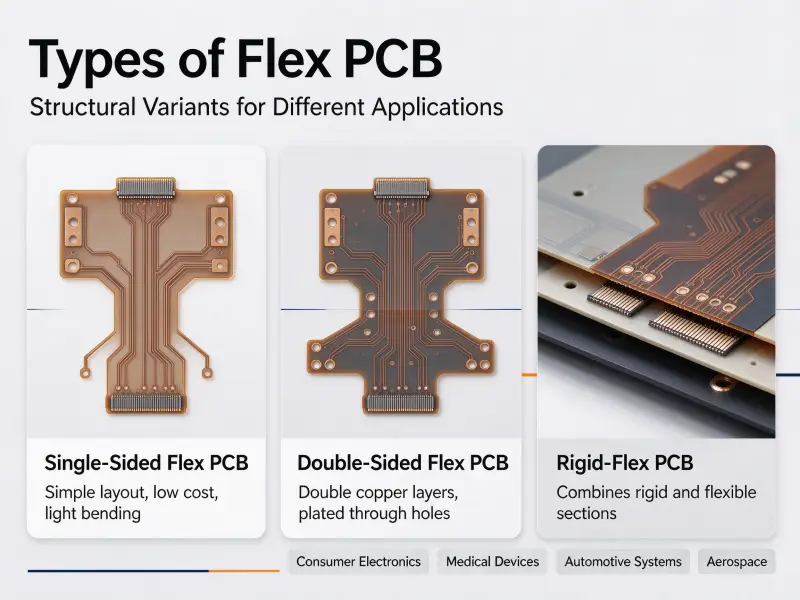
Types of PCB Technologies
Modern electronics use multiple PCB types:
| Type | Application |
|---|---|
| Rigid PCB | industrial systems |
| Flex-PCB | wearable devices |
| Rigid-Flexible-PCB | aerospace systems |
| Metal Core PCB | LED and power electronics |
| Ceramic PCB | extreme heat environments |
Special applications:
- led printed circuit board
- led light pcb board
- small printed circuit board
PCB in Modern Applications
Industrial automation
- pcb motor
- robotics controllers
Lighting systems
- LED drivers
- thermal management boards
Consumer electronics
- smartphones
- IoT devices
Automotive systems
- EV battery control
- power distribution modules
PCB Design Trends and Modern Innovations
Recent pcb design news highlights:
- AI-assisted layout optimization
- embedded sensors in PCB layers
- thermal-aware routing algorithms
- advanced multilayer stacking
Emerging innovations include:
- horizontal pcb busbars
- diy pcb uv exposure box
- advanced prototyping workflows
PCB Trade and Industry Standards
Global classification:
- printed circuit board hs code typically falls under HS 8534
This impacts:
- global logistics
- import/export tariffs
- compliance documentation
Industry events:
- electronics expos
- events in pcb manufacturing conferences
PCB Ecosystem and Cultural Context (Unexpected but Real Industry Search Behavior)
Interestingly, search data also includes unrelated queries such as:
- strip clubs in pcb (tourism-related keyword ambiguity)
However, in engineering and manufacturing contexts, focus remains strictly on electronics production.

SLPCBA: Modern PCB Manufacturing and Assembly Partner
As PCB technology evolves from simple wiring boards to complex multilayer systems, manufacturers need partners capable of supporting:
- High-density design requirements
- Rapid prototyping cycles
- Integrated assembly services
SLPCBA capabilities include:
- Advanced Printed Circuit Board (PCB) fabrication
- High-precision HDI PCBs
- Flexible production for Rigid-Flexible-PCB
- Full PCB Assembly services
- Support for High Speed PCB and High Frequency PCB
Engineering support:
- DFM analysis
- Component sourcing (Electronic Components)
- Functional printed circuit board testing
Industry applications:
- industrial automation
- EV systems
- consumer electronics
- LED systems (led pcb, led printed circuit board)
SLPCBA helps bridge the gap between PCB design innovation and scalable manufacturing execution.
The Century-Long Evolution of Printed Circuit Board (PCB)
From Albert Hanson’s early concepts in 1903 to Paul Eisler’s revolutionary etching process, and finally to today’s HDI and multilayer architectures, the Printed Circuit Board (PCB) has undergone a complete transformation.
It now supports:
- ultra-fast computing
- AI infrastructure
- advanced robotics
- global communication systems
The evolution of Printed Circuit Board (PCB) technology reflects not just engineering progress, but the entire history of modern electronics.
For companies developing next-generation products, partnering with a capable manufacturer like SLPCBA ensures access to scalable production, precision engineering, and reliable PCB Assembly solutions that align with modern performance demands.