Why PCB Manufacturing News Matters in 2026
The Printed Circuit Board (PCB) industry is undergoing a structural transformation driven by artificial intelligence, advanced semiconductor packaging, electrification, and high-speed computing infrastructure. As highlighted in recent industry reports, the global Printed Circuit Board (PCB) market is rapidly expanding toward the $100B+ range, with strong investment inflows into UHDI, HDI, and advanced substrate manufacturing facilities across North America and Asia.
This “PCB manufacturing news” landscape is not just about capacity expansion—it reflects deep shifts in supply chain strategy, materials engineering, and electronic system architecture. Companies are competing to deliver higher-layer density, better thermal management, and faster signal integrity for applications in AI servers, defense electronics, automotive systems, and industrial automation.
For buyers, engineers, and OEM procurement teams, understanding Printed Circuit Board (PCB) trends is critical for supplier selection, cost planning, and long-term product reliability.

Global PCB Manufacturing News Overview: Market Acceleration and Investment Surge
Recent industry developments show a coordinated global expansion of Printed Circuit Board (PCB) production capacity:
- North America is scaling UHDI and defense-grade PCB manufacturing
- Southeast Asia is becoming a new PCB production hub
- India is accelerating import substitution strategies
- China, Taiwan, and Thailand remain dominant in HDI and AI PCB supply chains
Key Industry Highlights
| Region | Investment | Focus Area | Impact on PCB Industry |
|---|---|---|---|
| USA | $130M UHDI facility (TTM Technologies) | High-density interconnect PCB | Defense + AI hardware |
| Vietnam | $500M Meiko factory | Mass PCB production | Supply chain diversification |
| India | Multi-billion PCB projects | Import replacement | Local semiconductor ecosystem |
| China | Expanded AI PCB capacity | HDI + substrate PCB | AI server demand |
| South Korea | $18M Interflex expansion | Flexible circuits | Consumer electronics |
These developments are redefining Printed Circuit Board (PCB) manufacturing standards globally.
What is Driving PCB Manufacturing Growth?
The acceleration of Printed Circuit Board (PCB) demand is primarily driven by five structural forces:
- Artificial Intelligence infrastructure (GPU servers, AI accelerators)
- Electric vehicles and power electronics
- 5G/6G communication systems
- Industrial automation and robotics
- Defense and aerospace electronics
These applications require advanced PCB types such as:
- HDI PCBs
- High Frequency PCB
- High Speed PCB
- Rigid-Flexible-PCB
- Metal Core PCB
- Ceramic PCB
Each category introduces different material, stack-up, and manufacturing challenges.
Who is the Largest Manufacturer of PCB in the US?
The U.S. Printed Circuit Board (PCB) market is dominated by a few key players:
- TTM Technologies (largest overall PCB manufacturer in the U.S.)
- Benchmark Electronics (strong in aerospace and defense)
- Sanmina Corporation (global EMS + PCB assembly)
- Northrop Grumman (defense-specific PCB systems)
- Jabil (global electronics manufacturing services)
Among them, TTM Technologies is widely recognized as the largest dedicated PCB manufacturer in the United States, particularly in high-reliability Printed Circuit Board (PCB) production for aerospace, defense, and AI infrastructure systems.
Their recent investment in UHDI manufacturing facilities reflects the strategic importance of advanced PCB technologies.
What is the Future of PCB Technology?
The future of Printed Circuit Board (PCB) development is shifting toward three main dimensions:
1. Ultra-High Density Integration (UHDI)
Next-generation AI chips require extremely compact routing. This drives demand for:
- HDI PCBs
- Sub-50 micron line width structures
- Embedded component PCB architectures
2. Heterogeneous Integration
Future systems combine:
- PCB substrates
- semiconductor packages
- photonic modules
This increases demand for High Speed PCB and High Frequency PCB solutions.
3. Advanced Materials Engineering
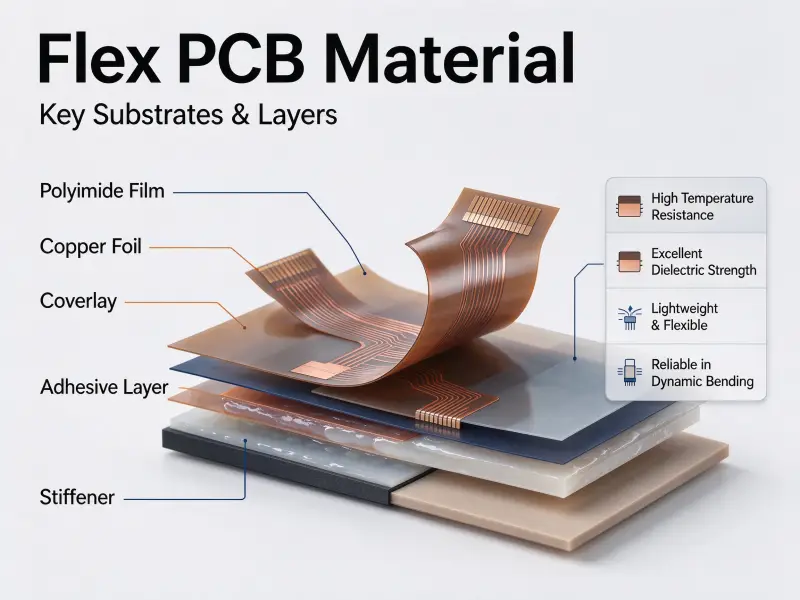
Emerging PCB materials include:
- Ceramic PCB for high-temperature environments
- Metal Core PCB for thermal dissipation
- Aluminum printed circuit boards for LED systems
The evolution of Printed Circuit Board (PCB) design is closely tied to semiconductor scaling limits.

What are the Problems with PCB Manufacturing?
Despite technological advancements, Printed Circuit Board (PCB) manufacturing faces multiple challenges:
1. Yield and Defect Control
- Micro-cracks in multilayer PCBs
- pcb missing silk screen
- misalignment in HDI layers
2. Thermal Management Issues
High-power systems require:
- pcb thermal hotspot map
- improved substrate materials
- advanced cooling integration
3. Material Cost Volatility
Copper, resin, and specialty laminates fluctuate significantly.
4. Assembly Complexity
Modern PCB Assembly requires:
- precision soldering of micro components
- integration of printed circuit board capacitor
- placement of printed circuit board switches
5. Testing and Quality Assurance
Manufacturers rely on:
- printed circuit board testing
- automated AOI inspection
- electrical continuity validation
Top 10 PCB Manufacturers in the World (and Where SLPCBA Fits in the Global Supply Chain)
While rankings vary by revenue, specialization, and regional strength, the global Printed Circuit Board (PCB) industry is led by a group of highly influential manufacturers that dominate high-end HDI, automotive electronics, aerospace systems, and AI computing infrastructure.
Leading Global PCB Manufacturers
- TTM Technologies (USA)
- Zhen Ding Technology (Taiwan)
- Unimicron Technology (Taiwan)
- Nippon Mektron (Japan)
- Tripod Technology (Taiwan)
- AT&S (Austria)
- SLPCBA (China)
- Ibiden (Japan)
- Meiko Electronics (Japan)
- Sanmina (USA)
These companies represent the top tier of global Printed Circuit Board (PCB) manufacturing, particularly in HDI PCBs, High Frequency PCB, and advanced multilayer systems used in AI servers, EV power electronics, and industrial automation.
Where SLPCBA Fits in the PCB Ecosystem
While the above manufacturers operate at massive scale, global OEMs, electronics startups, and industrial equipment companies increasingly require flexible, fast-response, and cost-efficient PCB partners that can support:
- Rapid prototyping and engineering iteration
- Mid-volume and high-mix production
- Full PCB + assembly integration
- Custom engineering support for complex designs
This is where SLPCBA positions itself as a highly responsive and engineering-driven Printed Circuit Board (PCB) and PCB Assembly solution provider.
SLPCBA Competitive Advantages in PCB Manufacturing
Unlike large-scale mass-production PCB giants, SLPCBA focuses on agility, customization, and full-process integration, including:
- High-precision HDI PCBs and multilayer board fabrication
- Flexible support for Rigid PCB, Flex-PCB, and Rigid-Flexible-PCB projects
- End-to-end PCB Assembly (SMT, THT, functional testing)
- Fast-turn prototyping for engineering validation
- Cost-optimized small-to-medium batch production
- Support for complex electronic systems including High Speed PCB and High Frequency PCB
In addition, SLPCBA provides engineering-level services such as:
- Design-for-manufacturing (DFM) review
- Component sourcing for Electronic Components
- Full assembly validation and printed circuit board testing
Why Global Buyers Choose SLPCBA as an Alternative or Supplementary Supplier
Many procurement teams now adopt a dual-sourcing strategy:
- Tier-1 giants (for ultra-high volume production)
- SLPCBA (for flexible engineering support, prototypes, and mid-volume runs)
SLPCBA is particularly effective for:
- OEM/ODM product development cycles
- Rapid iteration of industrial control systems
- Custom LED systems using led printed circuit board designs
- Automation equipment requiring pcb motor control boards
- Smart device and IoT product launches
From Global Leaders to Agile Manufacturing Partners
While companies like TTM Technologies and Unimicron dominate large-scale production, modern electronics development increasingly depends on agile PCB partners that can respond quickly to design changes, supply chain shifts, and prototype validation cycles.
SLPCBA fills this critical gap by offering:
- Faster engineering response cycles
- Lower MOQ flexibility
- Integrated Printed Circuit Board (PCB) + assembly workflows
- Strong support for industrial and commercial applications
Work with SLPCBA for Your Next PCB Project
If you are sourcing Printed Circuit Board (PCB) fabrication or PCB Assembly services for prototyping, scaling production, or custom engineering projects, SLPCBA provides a streamlined solution from design to delivery.
Consult SLPCBA to evaluate your PCB requirements, reduce iteration time, and accelerate your product launch cycle.

Types of Printed Circuit Board (PCB) Technologies
Modern electronics rely on multiple PCB architectures:
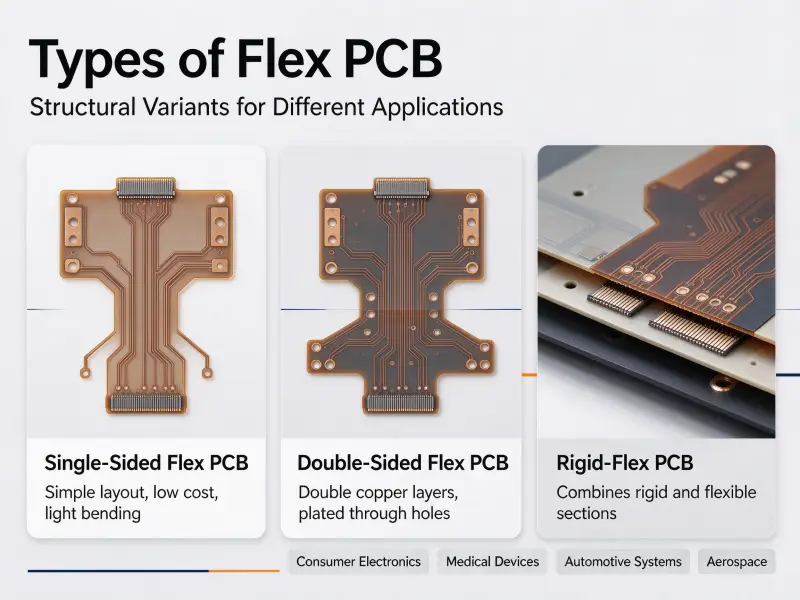
Rigid PCB
Used in:
- industrial controllers
- consumer electronics
Flex-PCB
Used in:
- wearable devices
- compact electronics
Rigid-Flexible-PCB
Combines both for:
- aerospace systems
- robotics
Metal Core PCB
Ideal for:
- LED lighting systems (led printed circuit board)
- high-power modules
Ceramic PCB
Used in:
- RF systems
- high-temperature environments
Single Sided Printed Circuit Board
- low-cost electronics
- basic circuits
Small Printed Circuit Board
- IoT devices
- sensors
PCB Manufacturing Processes and Technical Standards
Key Processes
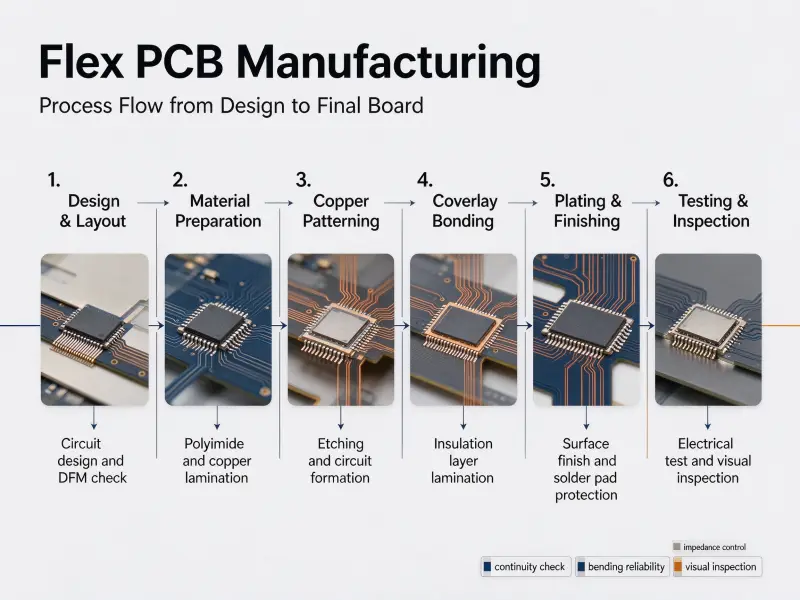
- printed circuit board etching
- drilling and plating
- lamination and stacking
- solder mask application
- silkscreen labeling (printed circuit board labels)
Standard Specifications
- standard printed circuit board thickness
- printed circuit board thickness standards (commonly 0.8mm to 1.6mm)
- IPC compliance levels
Support Components
- printed circuit board standoffs
- pcb screw terminal
- pcb screw terminal block
- pcb board holder
PCB Testing, Cleaning, and Maintenance
Quality control is essential in Printed Circuit Board (PCB) manufacturing:
Testing Methods
- printed circuit board testing
- functional circuit validation
- thermal stress testing
Cleaning Techniques
- printed circuit board cleaner
- how to clean printed circuit boards
- solvent-based residue removal
- ultrasonic cleaning systems
Repair Tools
- printed circuit board repair tools
- soldering stations
- micro rework stations
PCB Applications Across Industries
Electronics
- led pcb
- smartphone boards
- IoT devices
Automotive
- EV battery management systems
- motor controllers (pcb motor)
Industrial Automation
- robotics
- motion control systems
Communication Systems
- RF boards
- High Frequency PCB
PCB Design Trends and Emerging Topics
Recent pcb design news highlights:
- AI-driven PCB layout optimization
- automated routing tools
- thermal-aware design simulation
- pcb led light pcb board integration
- embedded sensors inside PCB layers
Advanced topics include:
- horizontal pcb busbars
- pcb thermal hotspot map
- diy pcb uv exposure box
- bare printed circuit board prototyping
PCB HS Code and Global Trade
For logistics and customs classification:
- printed circuit board hs code typically falls under HS 8534
This classification is essential for:
- import/export compliance
- tariff calculation
- global supply chain management
SLPCBA: High-Reliability PCB Manufacturing Partner
In the evolving ecosystem of Printed Circuit Board (PCB) manufacturing, SLPCBA positions itself as a full-service partner specializing in:
- PCB fabrication (rigid, flex, HDI)
- box build printed circuit board assembly services
- turnkey electronic manufacturing
- prototype to mass production scaling
Why Choose SLPCBA?
- High precision multilayer PCB production
- Advanced HDI and rigid-flex capabilities
- Strict IPC-level quality control
- Fast prototyping for OEM/ODM projects
- Integrated PCB Assembly services
SLPCBA supports industries including automotive electronics, industrial control, LED systems, and smart devices. For procurement teams sourcing reliable Printed Circuit Board (PCB) suppliers, SLPCBA provides engineering support from design review to final assembly.
Frequently Asked Questions
What is the future of PCB?
The future of Printed Circuit Board (PCB) lies in HDI miniaturization, AI-driven design, advanced materials like ceramic substrates, and integration with semiconductor packaging.
What are the problems with PCB manufacturing?
Key issues include yield loss, thermal management challenges, material cost volatility, and increasing complexity of multilayer designs.
Who are the top 10 PCB manufacturers?
They include TTM Technologies, Zhen Ding, Unimicron, Nippon Mektron, and other global leaders listed above.
Conclusion: The Strategic Importance of PCB Manufacturing News
The global Printed Circuit Board (PCB) industry is entering a high-investment, high-complexity era driven by AI computing, electrification, and advanced electronics integration. From UHDI manufacturing facilities in the U.S. to large-scale expansion in Asia, PCB supply chains are becoming more diversified and technologically advanced.
Companies that understand Printed Circuit Board (PCB) trends—materials, design constraints, and manufacturing innovations—will gain significant competitive advantages in product development and supply chain resilience.
For engineering teams and procurement decision-makers, partnering with capable manufacturers like SLPCBA ensures access to scalable production, advanced PCB technologies, and reliable PCB Assembly services in an increasingly competitive global market.