Every powered device around you relies on a small, dense layer of electronics to function. A smartwatch, a hospital monitor, and a car’s dashboard all share the same hidden core: a finished circuit board with components mounted on it. Without that layer, the hardware is just plastic, glass, and metal. The board is what gives the product its behavior, and building that board is a discipline of its own.
A printed circuit board assembly is used to provide electronic products their actual function. It takes a bare printed circuit board (PCB) and adds resistors, microchips, sensors, and connectors so the device can power on, process signals, and communicate with other systems. PCBA sits inside almost every powered product made today, from consumer gadgets to industrial machinery, and the same basic idea scales from a toy to a satellite.
The sections below show where PCBA is used and how the PCBA process supports each field, from the parts on the board to the lines that build it. Teams planning a build can compare faster PCB assembly services before locking a design.

What PCBA is and how it works
PCBA is the finished board you get after components are placed and soldered onto a bare printed circuit board. It turns a passive board into a working electronic module that can run software and control hardware around it.
A bare board is only the foundation. It carries copper traces and pads but no active parts. The PCBA manufacturing meaning comes from the assembly step: that is where the board becomes useful. Printed circuit board manufacturers start with the substrate, then build the conductive pattern, then mount parts in a controlled sequence. The result is a module that performs a specific job inside a larger product, whether that job is flashing a light or steering a vehicle.
From bare board to working module
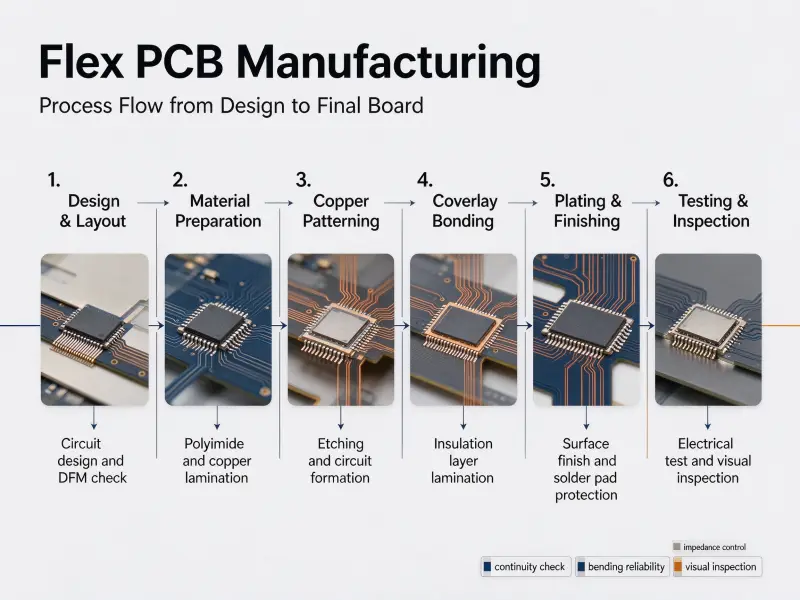
The bare board begins as a sheet of insulating material with thin copper layers on top. Common printed circuit board material includes FR-4 fiberglass for most devices and ceramic or metal-core options for heat-heavy uses. The copper is etched into traces that route signals between points. On its own, this board does nothing. Components change that.
A finished printed circuit board assembly adds the parts that matter: processors that run code, memory that stores it, power regulators that keep voltage steady, and connectors that link to the outside world. Together they form a small system. This is why people ask what PCBA is used for: it is the step that makes a board do something instead of sitting there inert.
The two main assembly methods
Most modern boards use surface-mount technology, where parts sit flat on the surface and are soldered by reflow. Surface mounting packs more parts into less space, which is why phones and laptops depend on it. Through-hole technology, where leads pass through the board, still appears where a strong mechanical bond matters, such as power connectors and industrial headers.
Many products mix both. A board may surface-mount its tiny logic chips while through-hole soldering secures the heavy connectors that are plugged in daily. Good printed circuit board design prepares for both methods in advance, so the assembly line does not discover a conflict after the boards are already fabricated.
The main steps in the PCBA process
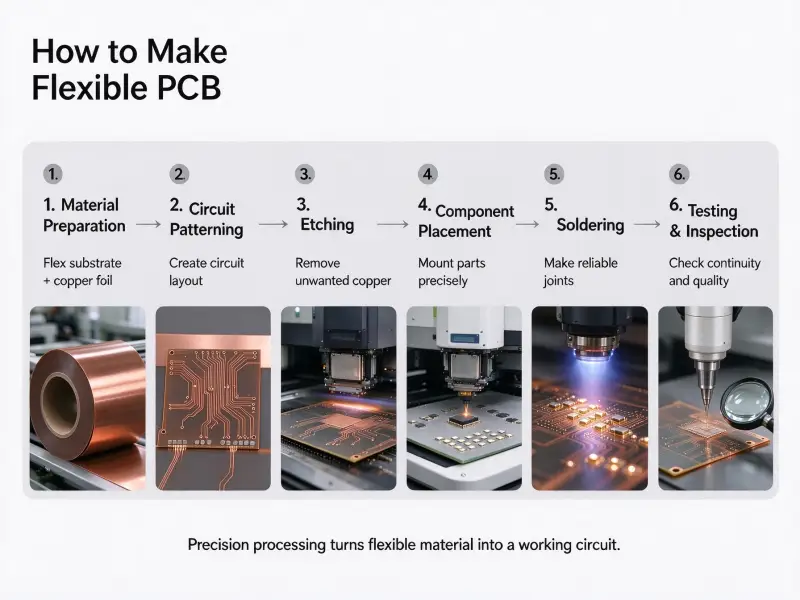
The PCBA process follows a repeatable path. Each step builds on the last, and mistakes early on are expensive to fix later.
| Step | What happens | Why it matters |
| Solder paste printing | A stencil lays paste on the pads | Sets the bond for every part |
| Component placement | Machines set parts on the paste | Accuracy drives final yield |
| Reflow soldering | Heat melts the paste to form joints | Weak joints cause field failures |
| Inspection | Cameras and tests check alignment | Catches defects before shipping |
| Functional testing | The board runs a real workload | Proves the module actually works |
Strong printed circuit board design makes this process smooth. Designers plan for heat, signal noise, and test access so the assembly line can build the board without constant rework. A board that is hard to assemble costs more and fails more often than one drawn with manufacturing in mind.
Consumer electronics and smart devices
PCBA is used in consumer electronics because those products need compact, low-cost, and reliable function in a small space. Nearly every gadget you own has at least one assembled board inside, and many have several working together.
Phones, laptops, earbuds, and watches pack multiple boards into a tight shell. Each board handles a job: the main processor board, the battery management board, and the wireless board. High-volume printed circuit board manufacturers run these in huge numbers, often with automated lines that place thousands of parts per minute and flag any unit that drifts out of tolerance. Brands that scale quickly often turn to electronic manufacturing solutions to keep sourcing and testing under one roof.
Phones, laptops, and wearables
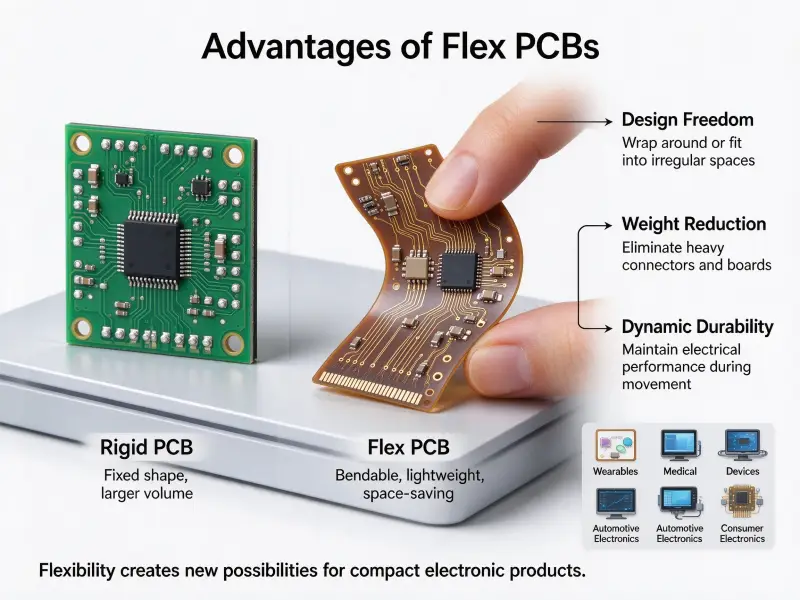
A smartphone alone carries a main logic board, a charging board, and small flex boards for the camera and buttons. Wearables push the same idea into even less room, using flex and rigid-flex boards that bend around a wrist or clip. The PCBA process for these products favors fine-pitch parts and tight quality checks, since a single bad joint can disable the whole device and send it back for repair.
Home and kitchen appliances
Today even simple appliances carry a board. A washing machine uses one to time its cycles. A microwave uses one to read the keypad and control the power. These boards do not need the speed of a phone, but they must survive heat, moisture, and years of use. The right printed circuit board material and coating keep them stable in a kitchen or laundry room, where a bare board would corrode within a season.
Entertainment and imaging gear
Televisions, game consoles, and cameras all lean on assembled boards for processing and power. A camera board must handle fast image data without dropping frames. A console board must stay cool under a long gaming session. Here the PCBA process balances performance parts with thermal design, because heat is the quiet enemy of consumer electronics that run for hours at a time.

Automotive and transportation systems
PCBA is used in vehicles because modern cars are computers on wheels. A single car can hold over a hundred electronic control units, and each one is built on an assembled board that watches a sensor or drives an actuator.
Cars demand more than consumer gear. Boards must work in heat, cold, vibration, and electrical noise, and they must keep working for a decade. Automotive assembly lines add burn-in testing and stricter traceability so a failure can be traced back to its batch and fixed across the whole fleet.
Engine and safety controls
Engine control units read sensors and adjust fuel and timing. Brake and stability systems use boards to react faster than a human can. These are safety-critical, so the PCBA process includes extra validation and conservative component ratings. A fault here is not a frozen screen; it is a real-world risk that the industry treats with formal review.
Electric vehicles and driver assistance
Electric cars add battery management boards that balance cells and watch temperature. Driver-assistance systems use boards to process camera and radar data and decide when to brake. These applications need clean power and strong signal handling, which comes back to careful printed circuit board design and component choice. A noisy board in a radar module can mean a missed reading on the road.
Lighting and cabin systems
Even a car’s lights and climate controls run on boards now. LED headlight drivers need tight current control. Seat and mirror memory needs a small controller per door. None of these are glamorous, but together they show how broadly PCBA is used once a product moves from mechanical to electronic control.
Medical and healthcare equipment
PCBA is used in medical devices because those tools must read the body, deliver treatment, and do both without error. A monitor, a pump, or an imaging machine is only as trustworthy as the board inside it, and patients rely on that trust every day.
Medical work raises the bar on documentation and testing. Boards often need traceability from raw material to finished lot, and many lines follow ISO-aligned quality systems so a hospital can prove where each part came from. The PCBA process here leaves a paper trail that consumer electronics rarely need. Hospitals and device OEMs frequently rely on OEM PCB PCBA contract manufacturing to keep volume steady while meeting those standards.
Monitoring and diagnostic tools
Heart monitors, glucose readers, and portable diagnostic kits all rely on assembled boards to sense signals and send results. Low noise matters here, because a faint heartbeat must not get lost in electrical interference. The printed circuit board material and layout work together to keep the signal clean, and a shielded board can mean the difference between a correct reading and a false alarm.
Imaging and life-support systems
Scanners and ventilators use boards that run continuous workloads for years. A life-support device cannot afford a silent failure, so the PCBA process adds redundancy checks and long burn-in periods. These boards are built to a higher standard than a toy or a lamp, and they are tested far longer before they ever reach a clinic.
Wearable and dental health
Even small health products now carry boards. A continuous glucose patch reads the body through a tiny assembled module. A dental tool controls motor speed through one. The same rules apply at a small scale: clean signals, steady power, and a board that will not quit mid-use.

Industrial, networking, and communication infrastructure
PCBA supports infrastructure because networks and factories run without pause. Routers, base stations, and control cabinets need boards that stay up through heat, dust, and constant load, often with no one nearby to reboot them.
This environment is where board type choices matter most. A 5G radio runs hot, so it may use a metal-core or ceramic board. A factory floor is noisy and rough, so the design adds shielding and rugged connectors. The printed circuit board material is picked for the environment, not just for cost.
5G, routers, and data centers
Data moves through assembled boards at every node. A base station uses high-frequency boards to push signals at speed. A server uses dense multilayer boards to route data between processors and memory. Strong printed circuit board design keeps these signals fast and clean, which is why printed circuit board manufacturers invest in tight impedance control for network gear that cannot afford dropped packets.
Factory automation and robotics
Robots use boards to read encoders, drive motors, and talk to the line controller. Industrial boards face vibration, wide temperature swings, and electrical spikes from heavy machines switching on and off. The PCBA process here favors conformal coating and locked-down components so nothing shakes loose during a long shift on the plant floor.
Energy and agriculture
Solar inverters, battery storage, and smart meters all run on assembled boards that manage power and report data. Tractors and irrigation systems now carry boards for guidance and sensing. PCBA is used wherever a machine needs to measure, decide, and act without a person standing next to it, which describes most modern infrastructure.
Aerospace, defense, and emerging fields
PCBA is used in aerospace and defense because those systems must work at the edge of what environments allow. Boards in a plane or a satellite face radiation, extreme temperature swings, and zero chance of a field repair.
These builds use rated parts, heavier copper, and layered testing that goes well past commercial norms. The PCBA process for space-grade work can take months, with every joint inspected and every material certified. It is the same idea as a phone board, pushed to a standard where failure is not an option.
Where the field is heading
Newer uses keep appearing. Flexible boards fold into clothing for health tracking. Miniature assemblies run inside swallowable cameras. The core task stays the same: take a bare printed circuit board and turn it into something that senses, thinks, or acts. As products get smaller and smarter, the PCBA process keeps adapting to place more function into less space.
Choosing the right assembly partner
PCBA is only as good as the partner who builds it. The right shop helps with design, scales from prototype to volume, and stands behind its quality. For teams that need end-to-end help, working with a certified PCB/PCBA manufacturer removes the handoff pain between a board house and an assembly house.
Slpcba runs turnkey assembly that covers fabrication, component sourcing, and final test under one roof. That model shortens lead time and keeps accountability in one place. Teams can move from a first prototype to mass production without re-qualifying a new supplier at each step, which matters when a product schedule is tight.
What to check before you order
Before you commit, compare shops on a few points that affect cost and risk.
| Criterion | What to look for | Why it affects you |
| Capability | Layer count, min trace, part pitch | Sets whose designs they can build |
| Certification | ISO, UL, RoHS alignment | Needed for many export markets |
| Volume range | Prototype to mass run | Avoids a second supplier later |
| Test coverage | AOI, X-ray, functional test | Lowers field return rate |
| Support | DFM feedback, fast quotes | Saves time before tooling |
Slpcba also offers OEM PCB PCBA contract manufacturing for customers who want a steady production line without building their own. The team provides electronic manufacturing solutions that reach past assembly into sourcing and logistics, so a customer can focus on the product instead of the supply chain. If your project needs a reliable build partner, reach out through the contact page and share your files for a quote.
Common mistakes to avoid
Teams often skip design-for-manufacture review and pay for it later in rework. Others pick a shop on price alone and discover weak test coverage only after returns climb. A short call with a capable partner before tooling usually saves more than it costs, because the board gets built right the first time.
Frequently asked questions
What is the difference between PCB and PCBA?
A PCB is the bare board with copper traces and no parts. A PCBA is that same board after components are soldered on. The PCB is the foundation; the PCBA is the working module that performs the product’s function.
How long does PCBA manufacturing take?
A prototype run often ships in one to two weeks, while volume production depends on part lead times and test depth. Complex or certified builds take longer because they add inspection, burn-in, and documentation steps that commercial runs may skip.
Which industries rely on turnkey PCB assembly?
Consumer electronics, automotive, medical, and industrial teams all use turnkey assembly. It suits any group that wants fabrication, sourcing, and testing handled by one partner instead of managing three separate vendors.
Why does board material choice matter?
The material sets how much heat a board tolerates and how stable its signals stay. FR-4 works for most products, while ceramic or metal-core boards suit heat-heavy or high-frequency uses where a standard board would fail