A Complete Guide to Printed Circuit Board (PCB) Technology, Types, Manufacturing, and Applications
If you have ever wondered “what is a pcb board?”, the answer goes far beyond a simple green board with electronic parts attached. A Printed Circuit Board (PCB) is the platform that enables communication, power distribution, signal transmission, and integration between thousands—or even millions—of Electronic Components. Without the Printed Circuit Board (PCB), modern electronics simply would not exist.
Modern technology depends on electronic systems that are smaller, faster, and more powerful than ever before. Whether it is a smartphone, industrial robot, electric vehicle, medical imaging device, or AI server, every system relies on a critical foundation: the Printed Circuit Board (PCB).
As digital transformation accelerates across industries, advanced PCB technologies such as HDI PCBs, High Speed PCB, High Frequency PCB, Flex-PCB, and Rigid-Flexible-PCB are becoming essential for next-generation products.
In this comprehensive guide, we will explore everything you need to know about the Printed Circuit Board (PCB), including its structure, types, materials, manufacturing processes, assembly technologies, applications, future trends, and how SLPCBA helps global customers achieve reliable electronic manufacturing solutions.

Understanding the Definition of a PCB Board
A Printed Circuit Board (PCB) is an engineered substrate that mechanically supports and electrically connects various Electronic Components through conductive pathways printed or etched onto a non-conductive base material.
The primary functions of a Printed Circuit Board (PCB) include:
- Supporting components mechanically
- Conducting electrical signals
- Delivering power across the system
- Organizing circuit layouts
- Improving product reliability
- Enabling miniaturization
Before the invention of the Printed Circuit Board (PCB), engineers relied on point-to-point wiring, which required manually connecting components using individual wires. Modern circuit boards eliminate this complexity by integrating all electrical pathways into a compact design.
Today, almost every electronic circuit board found in consumer electronics, automotive systems, industrial controls, and medical equipment is based on Printed Circuit Board (PCB) technology.
Why Is the Printed Circuit Board (PCB) So Important?
The Printed Circuit Board (PCB) serves as the central nervous system of electronic products.
Without a Printed Circuit Board (PCB), devices would face:
- Larger physical dimensions
- Lower reliability
- Difficult maintenance
- Increased manufacturing costs
- Reduced signal integrity
Advantages of a modern pcb circuit board include:
| Feature | Benefit |
|---|---|
| Compact Design | Smaller devices |
| Reliable Connections | Fewer failures |
| Automated Manufacturing | Lower production cost |
| High Signal Integrity | Better performance |
| Scalable Production | Mass manufacturing capability |
This explains why the pcb printed circuit board has become indispensable in modern electronics.
Anatomy of a Printed Circuit Board (PCB)
Although every Printed Circuit Board (PCB) is designed differently, most boards contain several fundamental layers.
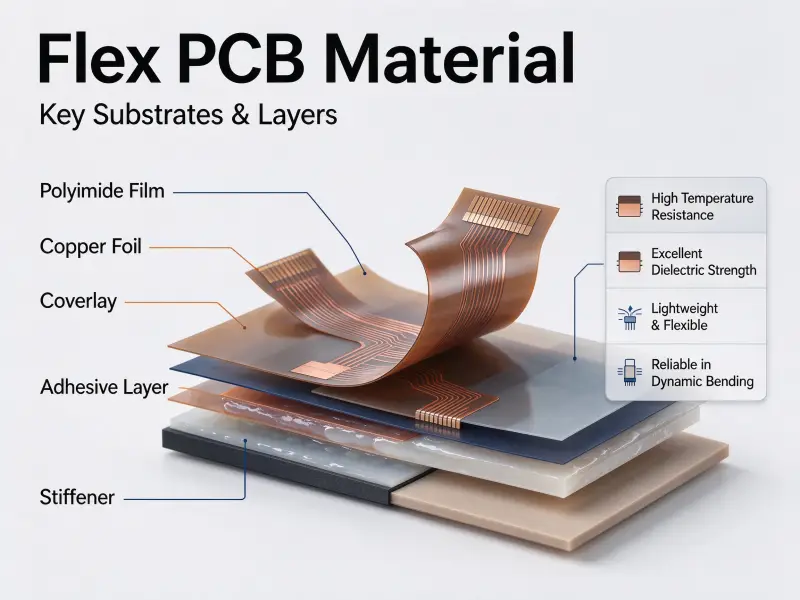
Base Substrate
The substrate provides insulation and structural support.
Common materials include:
- FR4 fiberglass
- Polyimide
- Aluminum
- Copper-core materials
- Ceramic
Copper Layer
Copper traces create the electrical pathways that connect circuit board components.
Functions include:
- Power distribution
- Signal routing
- Grounding
Solder Mask
The solder mask protects exposed copper traces.
Benefits include:
- Corrosion prevention
- Electrical isolation
- Improved durability
Silkscreen Layer
The silkscreen provides:
- Component labels
- Assembly markings
- Product information
Together these layers create a functional pcb printed circuit capable of supporting highly complex systems.
Major Types of Printed Circuit Board (PCB)
Different applications require different PCB technologies.
Rigid PCB
The Rigid PCB is the most commonly used board type worldwide.
Characteristics:
- Non-flexible structure
- Cost-effective production
- Excellent durability
- Suitable for automated assembly
Applications include:
- Computers
- Home appliances
- Industrial controllers
- Telecommunications equipment
Most traditional circuitboards are manufactured as Rigid PCB products.
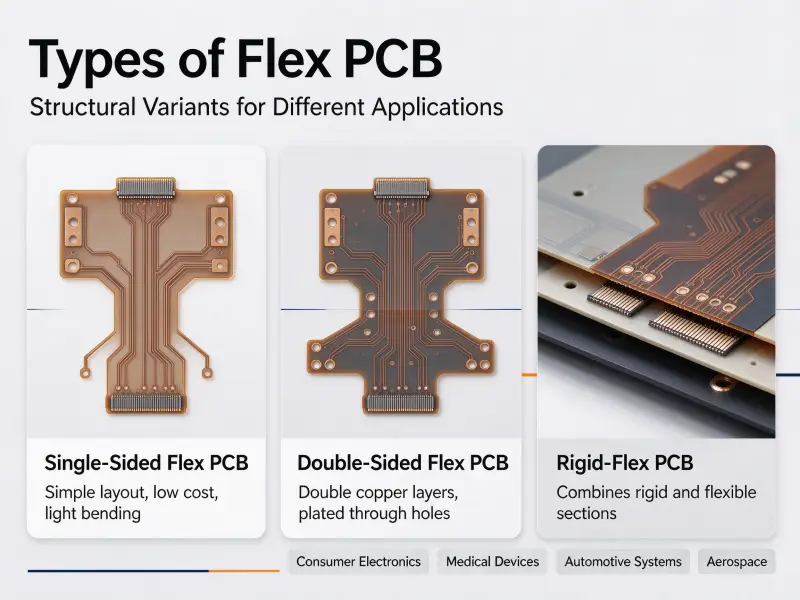
Flexible PCB (Flex-PCB)
A Flex-PCB uses flexible polymer materials instead of rigid fiberglass.
Advantages:
- Bendable structure
- Lightweight design
- Space savings
- Improved vibration resistance
Common forms include:
- flexible pcb
- flexible printed circuit
- flexible pcb board
- flexible circuit board
- flexible printed circuit board
- flex printed
- flex circuit board
Applications include:
- Wearable electronics
- Smartphones
- Cameras
- Medical devices
Rigid-Flexible-PCB
A Rigid-Flexible-PCB combines rigid and flexible sections within a single assembly.
Benefits:
- Reduced wiring
- Improved reliability
- Better space utilization
- Lower assembly complexity
Industries utilizing Rigid-Flexible-PCB technology include:
- Aerospace
- Defense
- Medical equipment
- High-end consumer electronics
HDI PCBs
HDI PCBs (High-Density Interconnect PCBs) are designed for maximum component density.
Features:
- Microvias
- Fine-pitch routing
- Compact footprints
- Enhanced signal performance
Applications:
- Smartphones
- AI hardware
- Medical electronics
- Industrial automation
High Speed PCB
As processors become faster, signal transmission requirements increase dramatically.
A High Speed PCB is specifically engineered to support:
- Multi-gigabit communication
- High-frequency processors
- Data center equipment
- Network infrastructure
Benefits:
- Reduced signal loss
- Controlled impedance
- Improved transmission quality
High Frequency PCB
A High Frequency PCB supports RF and microwave applications.
Industries include:
- 5G communications
- Satellite systems
- Radar equipment
- Wireless networking
These boards typically use specialized low-loss materials.
Metal Core PCB
A Metal Core PCB incorporates aluminum or copper substrates.
Advantages:
- Excellent thermal conductivity
- Better heat dissipation
- Longer product lifespan
Applications:
- LED lighting
- Automotive electronics
- Power converters
Ceramic PCB
A Ceramic PCB utilizes ceramic materials such as aluminum nitride and alumina.
Key benefits:
- High-temperature resistance
- Excellent insulation
- Superior thermal performance
Applications:
- Aerospace electronics
- Semiconductor modules
- High-power industrial systems

PCB Materials Comparison
Choosing the right material is critical for achieving optimal performance.
| PCB Material | Thermal Performance | Cost | Typical Application |
|---|---|---|---|
| FR4 | Moderate | Low | Consumer electronics |
| Polyimide | High | Medium | Flexible electronics |
| Aluminum | Very High | Medium | LED systems |
| Copper Core | Excellent | High | Power electronics |
| Ceramic | Outstanding | High | Aerospace and defense |
Modern Printed Circuit Board (PCB) design increasingly requires materials optimized for high-speed data transmission and thermal management.
Circuit Board Components on a PCB
A completed Printed Circuit Board (PCB) contains numerous Electronic Components.
Active Components
These devices require power to function.
Examples:
- Microcontrollers
- Processors
- Transistors
- Amplifiers
- Sensors
Passive Components
These support circuit functionality without generating energy.
Examples:
- Resistors
- Capacitors
- Inductors
- Transformers
- Fuses
Proper placement of these circuit board components is critical to overall performance.
PCB Designing: From Concept to Layout
Modern pcb designing utilizes sophisticated electronic design automation (EDA) software.
The workflow generally includes:
Circuit Schematic Creation
Engineers define electrical connections and functionality.
Component Placement
Components are arranged strategically to optimize:
- Signal flow
- Thermal performance
- Manufacturing efficiency
PCB Routing
Copper traces are routed to create a complete pcb circuit.
Simulation and Verification
Engineers analyze:
- Signal integrity
- Thermal performance
- Electromagnetic compatibility
Advanced pcb designing significantly improves reliability while reducing development costs.
PCB Manufacturing Process Explained
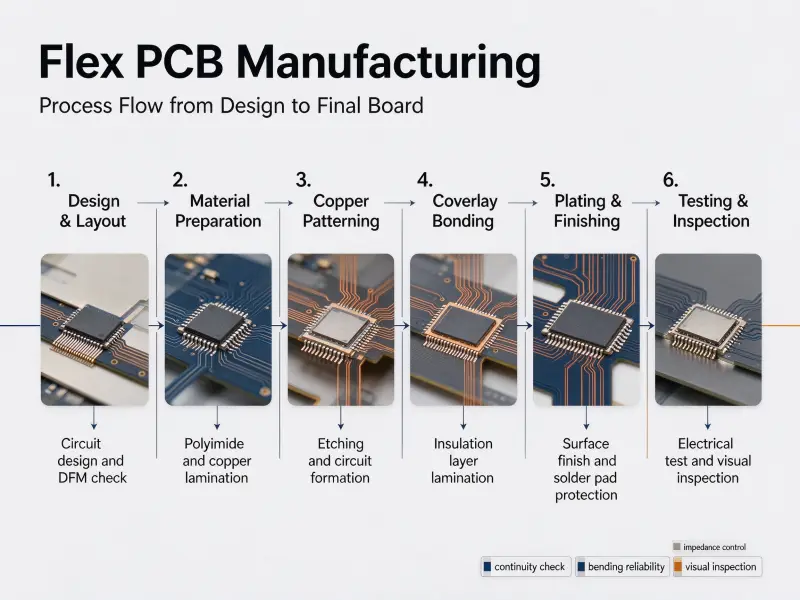
The pcb manufacturing process involves multiple precision-controlled stages.
Step 1: Engineering Review
Manufacturing engineers verify the design.
Step 2: Material Preparation
Raw laminates are prepared for production.
Step 3: Imaging
Circuit patterns are transferred onto copper surfaces.
Step 4: Etching
Unwanted copper is removed.
Step 5: Drilling
Mechanical and laser drilling create vias and mounting holes.
Step 6: Copper Plating
Electrical interconnections are formed.
Step 7: Solder Mask Application
Protective coatings are added.
Step 8: Surface Finishing
Popular finishes include:
- HASL
- ENIG
- OSP
- Immersion Silver
Step 9: Electrical Testing
Every circuit pcb board undergoes inspection.
This comprehensive process enables reliable pcb board fabrication and consistent quality.
PCB Manufacturing vs PCB Assembly
Many buyers confuse pcb manufacturing with PCB Assembly.
The distinction is important.
| Process | Description |
|---|---|
| pcb manufacturing | Creation of bare PCB |
| pcb assembly | Installation of components |
| circuit board manufacturing | Board fabrication |
| printed circuit board production | Bare board production |
| circuit board assembly | Component assembly |
| pcb and assembly | Turnkey solution |
After printed circuit board production, the boards move to assembly operations.

Understanding PCB Assembly
A bare pcb board cannot function until components are installed.
This process is known as PCB Assembly.
Industry terms include:
- printed circuit assembly
- printed circuit board assembly
- pcb board assembly
- pc board assembly
- circuit card assembly
- assembled circuit board
- printed circuit board assy
- pcb printed circuit board assembly
- printed circuit board and assembly
SMT Assembly
Surface Mount Technology dominates modern electronics manufacturing.
Benefits:
- Faster production
- Higher density
- Lower costs
Through-Hole Assembly
Often used in high-reliability applications.
Advantages:
- Strong mechanical bonding
- Excellent durability
The completed pcba circuit board then undergoes testing and validation.
PCB Applications Across Industries
The Printed Circuit Board (PCB) powers virtually every industry.
Consumer Electronics
Examples include:
- Smartphones
- Tablets
- Smart TVs
- Gaming systems
Automotive
Modern vehicles may contain hundreds of Printed Circuit Board (PCB) assemblies.
Applications:
- ADAS
- Battery management
- Navigation
- Power control
Industrial Automation
Industrial systems rely heavily on pcb in circuit control architectures.
Applications:
- PLCs
- Robotics
- Sensors
- Motion controllers
Medical Devices
Examples:
- ECG systems
- MRI equipment
- Patient monitors
Aerospace and Defense
Critical uses include:
- Radar
- Satellites
- Navigation systems
- Communication equipment
Renewable Energy
Applications:
- Solar inverters
- Wind turbines
- Energy storage systems
Latest PCB Industry Trends
The global Printed Circuit Board (PCB) market is evolving rapidly.
Artificial Intelligence
AI servers require:
- Advanced HDI PCBs
- High-performance substrates
- Thermal optimization
Electric Vehicles
EV growth drives demand for:
- Metal Core PCB
- High-current designs
- Automotive-grade reliability
5G and Future Wireless Networks
The expansion of wireless infrastructure increases demand for:
- High Frequency PCB
- Low-loss materials
- Precision manufacturing
Miniaturization
Consumers want smaller devices.
This accelerates adoption of:
- Flex-PCB
- Rigid-Flexible-PCB
- High-density interconnect technologies
Choosing the Right PCB Board Manufacturer
Selecting a qualified pcb board manufacturer is essential.
Evaluation criteria include:
Manufacturing Capabilities
Can the supplier support:
- Rigid PCB
- Flex-PCB
- Rigid-Flexible-PCB
- HDI PCBs
- High Speed PCB
- High Frequency PCB
- Metal Core PCB
- Ceramic PCB
Quality Systems
Important certifications:
- ISO 9001
- IATF 16949
- ISO 13485
- UL
Engineering Support
A reliable pcb board maker should provide:
- DFM analysis
- Stack-up design
- Material recommendations
Production Capacity
Look for experience in:
- circuit board production
- pcb board production
- printed circuit board production
Why Choose SLPCBA for PCB Manufacturing and Assembly?
As a professional printed circuit manufacturer, SLPCBA delivers complete PCB solutions for customers worldwide.
One-Stop PCB Services
SLPCBA provides:
- PCB prototyping
- pcb board fabrication
- pcb assembly
- Functional testing
- Box-build integration
Advanced Technology Support
We manufacture:
- Rigid PCB
- Flexible PCB
- Rigid-Flexible-PCB
- HDI PCBs
- High Frequency PCB
- High Speed PCB
- Metal Core PCB
- Ceramic PCB
Strict Quality Control
Each project undergoes:
- AOI inspection
- X-ray inspection
- Flying probe testing
- Functional testing
Fast Turnaround
SLPCBA helps customers accelerate product launches while maintaining exceptional quality standards.
Whether you need prototypes or volume production, our engineering team is ready to support your project.
PCB Repair and Lifecycle Maintenance
Even reliable boards eventually require maintenance.
Common services include:
- pcb board repairing
- repairing printed circuit boards
- Component replacement
- Rework services
- Failure analysis
Proper maintenance extends product life while reducing operational costs.
Frequently Asked Questions
What is the difference between a PCB and a PCBA?
A Printed Circuit Board (PCB) is a bare board. A PCB Assembly includes installed components and becomes a functional electronic device.
What is the most common PCB material?
FR4 remains the most widely used material due to its balance of cost, durability, and electrical performance.
Which PCB type is best for compact devices?
HDI PCBs, Flex-PCB, and Rigid-Flexible-PCB designs are ideal for compact electronic products.
Why are High Speed PCBs important?
A High Speed PCB ensures signal integrity for modern processors, servers, and communication systems.
Conclusion
The Printed Circuit Board (PCB) is one of the most important technologies in modern engineering. Every pcb circuit board, electronic circuit board, printed wiring board, and advanced pcb printed circuit board enables the functionality of the devices we rely on every day. From AI computing and autonomous vehicles to renewable energy systems and medical innovations, the Printed Circuit Board (PCB) continues to evolve alongside technological progress.
As industries demand faster, smaller, and more reliable electronics, advanced solutions such as HDI PCBs, High Frequency PCB, High Speed PCB, Metal Core PCB, Ceramic PCB, Flex-PCB, and Rigid-Flexible-PCB will play an increasingly important role.
If you are searching for a trusted partner in pcb manufacturing, pcb board fabrication, circuit board manufacturing, printed circuit board assembly, or complete pcb printed circuit board assembly services, SLPCBA offers the expertise, technology, and quality assurance needed to bring your electronic products from concept to market efficiently.
Contact SLPCBA today to discuss your next PCB project and discover how our advanced manufacturing capabilities can help accelerate your success.